

Outdoor Work Glove Guide
Whenever and wherever I go, I always make sure I’ve got work gloves with me. It’s always an essential part of my outdoor kit, especially when bushcrafting or exploring the wilderness with my kids.
Of course not every glove is the same, and most of them require some initial treatment before their first use. So let me point out the most important aspects to consider when choosing your new outdoor working gloves.
MATERIAL
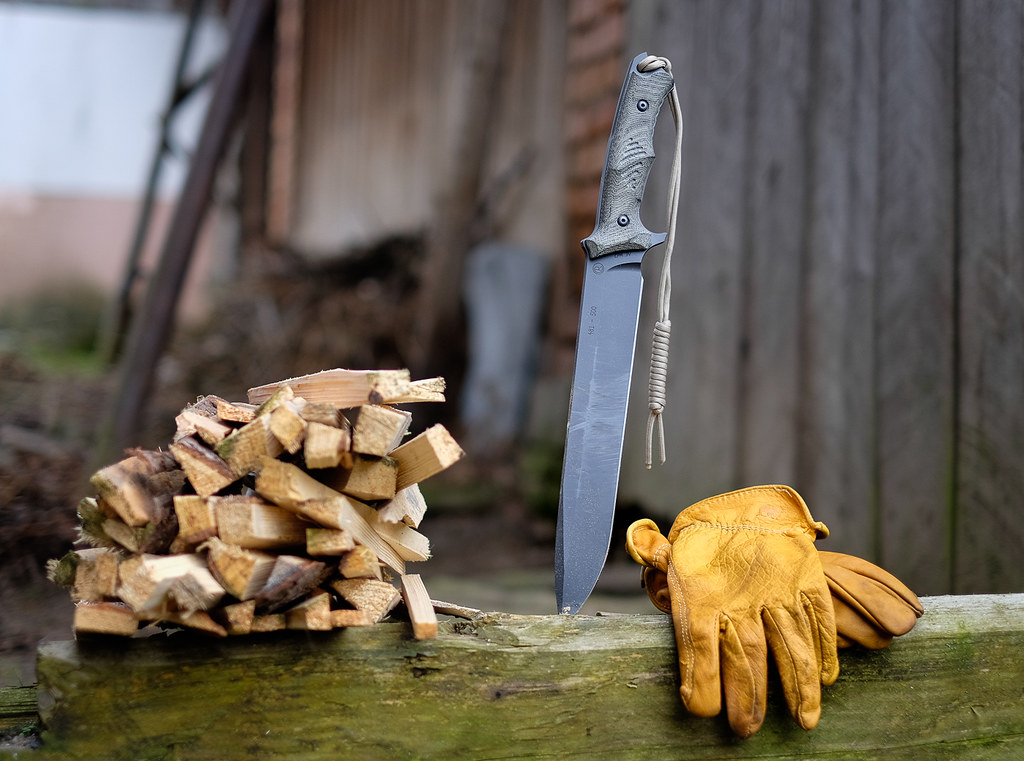
I prefer my outdoor working gloves to be made of leather, which is soft and strong. In my experience deer leather is the best classic material for outdoor gloves. It gives enough protection and durability for most outdoor tasks, yet allows for detailed work, provides very positive grip and ensures a physical resistance that lasts a couple of seasons. It can also be easily repaired and waterproofed. Goat leather is an equally good choice. Just try to avoid all kind of “mesh top” or “canvas top” working gloves from your hardware store as it gives very little (if any) protection to the top side of a hand. It’s maybe good as a tool-holding glove, but useless when you have to maneuver with your hands in a thorny bush. On the other hand thick and heavy pig skin gloves are fine for some heavy-duty work, but try precision cutting or whittling with your bushcraft knife when wearing such behemoths… no chance. Such gloves have their use so I keep them in the trunk of my car and in the garage, but I’d never call them a ‘pack essential’ – too big, too heavy, too specialized.

FIT
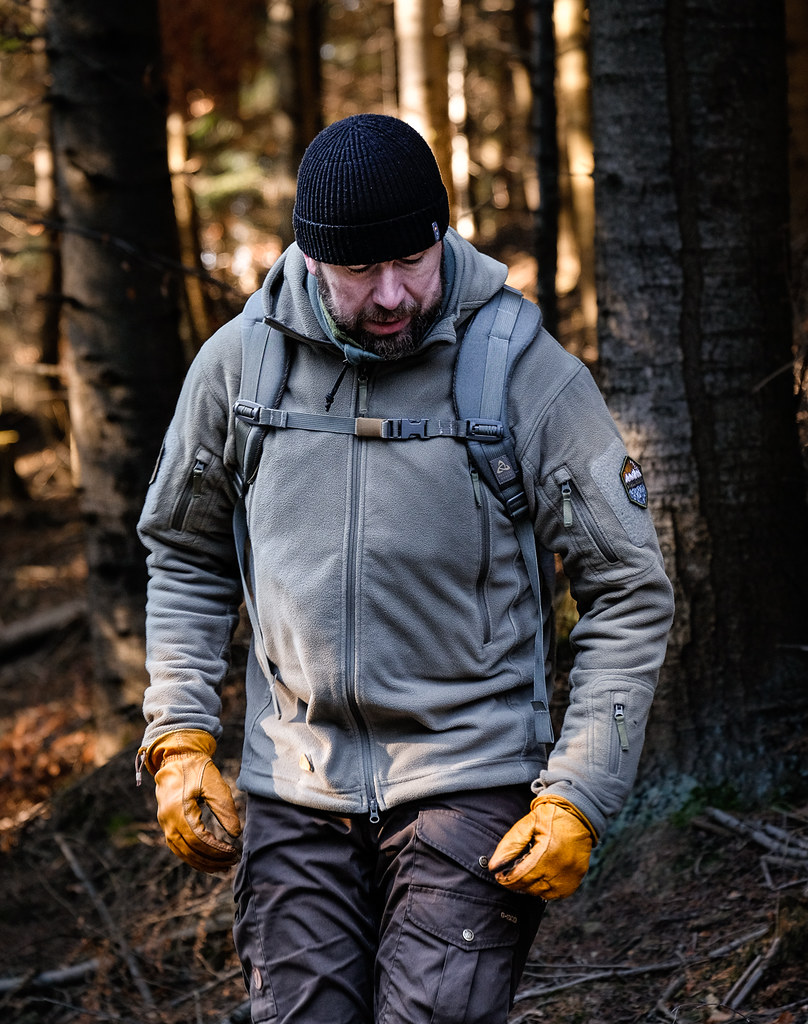
The best option would be to try before you buy, but if this is not possible just measure your hand carefully and follow maker’s sizing chart. You don’t want them too loose for sure. Deer leather stretches nicely which gives a fit perfect after just a couple of days in the field. So buy them quite snug, give them a day or two, and you should be happy camper! You want a good tactile fit. And again – avoid oversized cheap work gloves from a local hardware store – working comfort will be very low and detailed work would not be possible. It’s good for… nothing. Just avoid them, seriously.
LOOP
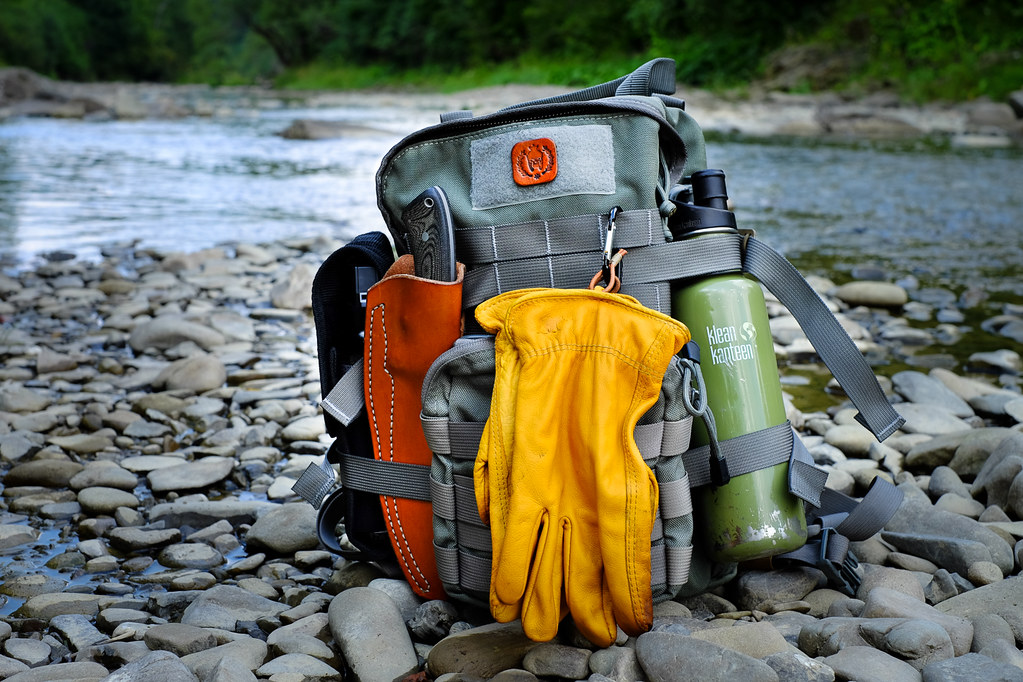
This is really important! You don’t want to lose your gloves in the outdoors. Make sure your gloves are equipped with proper loops so you can attach them to your backpack with an S-Binder, carabiner, or just piece of string. It’s essential to have the option to strap them to your pack or belt – if they’re wet or dirty, it’d never be a good idea to stuff them inside your backpack. If there is no loop at all (or the loop is just not big enough) take your time and make your own loops. Puncture the sleeve or stitch/tie a piece of paracord loop to your gloves. It’s quick and easy, and saves you from a lot of problems later in the field.
WAX
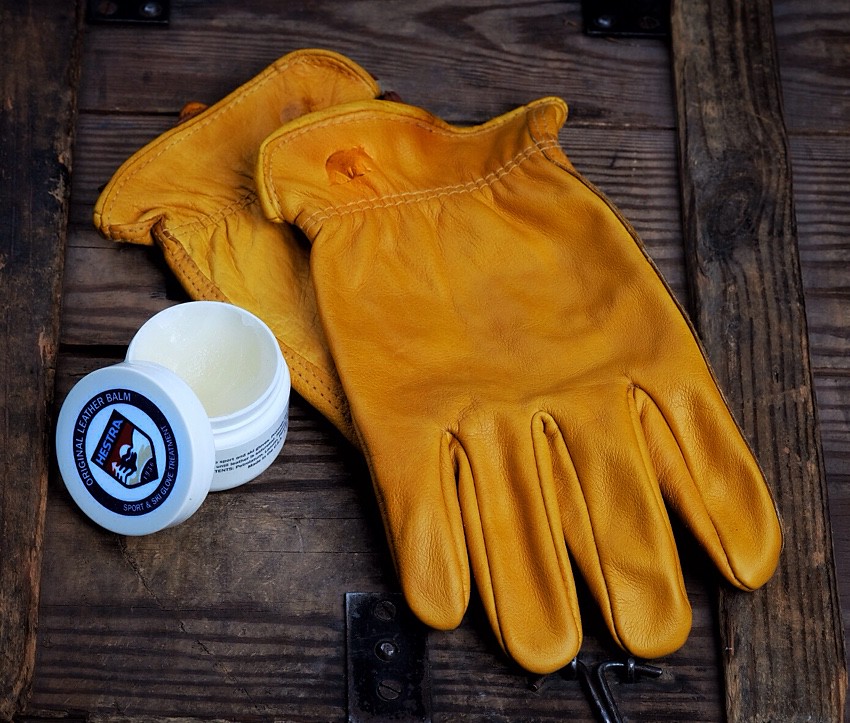
Before you start using your new leather gloves be sure to wax them well with a quality leather wax. I use Hestra glove wax but there are many other wax names on the market. Wax gives waterproofness and durability. It also ensures a better fit-to-hand and make your gloves more elastic. The difference between waxed and unwaxed leather gloves usage is really dramatic! Well waxed gloves are just a joy to use. The tactile feedback is so much better, gloves stay dry even when working with wet wood, and of course cleaning is way easier (from resin, blood, soil etc.). Just wax your leather gloves and check for yourself.
Now quickly about daily care… keep them dry, well ventilated and waxed. Carry them relaxed outside your pack (only in good weather of course). A deep scratch on the surface is not a problem, just wax well and rub with your fingers until it’s hot enough to absorb the wax. For small holes (from a puncture) I just use a drop of superglue, let it dry and wax the area well. For bigger cuts – just stitch it with a strong nylon thread and wax. Sail stitch is the best (just Google it) as it keeps the surface flat. You can reinforce the stitching with a bit of superglue, but it’s not necessary. When stitched carefully – there is no change to durability, it’s still watertight after waxing, and it looks great too! Battle scars are cool 😉

Take care of your gloves and your gloves will take care of you (well… your hands to be exact). Use them for work, and make them look better and better every time. My preferred lightweight working gloves are Hestra Work Gloves (available here: http://www.naturkompaniet.se/hestra-work-glove), which are made of deer leather, the quality is very good especially for the price. It’s not a sophisticated model but they work just so well for me that I bought a handful and gave away to some of my friends as a small gift. The loop-hangers are quite small so I added my own thong loops.

And below you can see my gloves after a season, just keep in mind I used them a lot for everything – from chopping wood, through forest and bushcraft work, to fire building and maintenance and even for a barbeque! I used them in full summer and also in real winter conditions, deer skin is flexible and doesn’t crack even at -12°C… yeah, I checked that. In my opinion the gloves look great, much better, than when they were new, LOL.
And below you can see my gloves after a season, just keep in mind I used them a lot for everything – from chopping wood, through forest and bushcraft work, to fire building and maintenance and even for a barbeque! I used them in full summer and also in real winter conditions, deer skin is flexible and doesn’t crack even at -12°C… yeah, I checked that. In my opinion the gloves look great, much better, than when they were new, LOL.
Other working gloves which I can recommend:
- 1. HESTRA Skullman (slightly heavier than Work Gloves, designed by Johan Skullman, one of the best outdoor expert from Sweden. Awesome, model released Fall ’15. Not cheap but for me they’re a ‘must have’ for the new season):
- 2. HESTRA Fält Guide Glove (great for winter, with removable wool liner, super solid!)
- 3. OUTDOOR RESEARCH Supressor Gloves (flame resistant, with Nomex, awesome but expensive):
- 4. STIHL Leather Work Gloves (not as fine as Hestra but still well made and working good, they’re also considerably cheaper… got couple of these around house and car, they’re good value!)

Piotr Ma Contributor & Edge Specialist
Adventurer, outdoorsman, mountaineer, sailor and gear enthusiast from Poland. It all started for Piotr when he was 10 and went to the high mountains with his father. Now he’s transferring his experiences and knowledge to the younger generation, together with his wife. His perfect vacation is not an all-inclusive hotel but a nothing-inclusive mountain shelter. More…
I bought the Hestra gloves you provided a link too based off your comments/review. These gloves are not available on the Hestra website and when I received them I questioned the authenticity. My reasoning;
1) Labeled made in China
2) Naturkompanite logo and not Hestra
Apparantely Hestra make these gloves in China to reduce the cost and they are made for the online retailers Naturkompaniet in Sweden using their ‘bear’ logo. Either way I wasn’t dissatisfied as these gloves are exactly what I wanted when I read your review. Good fit, soft leather that I think will wear and work well as a light work glove. I say ‘light’ as I also have the Hestra Falt glove for winter use and the Hestra Skullman for heavy work with chainsaw and axe. This lighter work glove is perfect for all year carrying on your belt or rucksack for everyday use i.e. pegging tent, splitting kindling, managing the fire and handling hot cooking items.
All said and done, great review and great pictures and the perfect lead I needed so I’ve subscribed now and will watch your website with interest.
With thanks,
Kurt
Pro Guide
Thanks for sharing your feedback on following our links and your process of getting hold of these great gloves!
I always make every effort to find links to correct/authentic products, but obviously buyers discretion is always advised! Often companies can update their websites and I’ve even found occasions where old product links re-direct to different places.
I was really pleased to read that you were happy with your purchase and I’m so glad Piotr’s thoughts helped you find them!
Following my review on 19/2, now two months later and some comments having had plenty of use;
1) A great product, soft, looks and feels great and protects your hands where needed.
2) I bought a second pair for future use and I went a size Sam.ler to size 9 and they are. Perfect fit.
There was a comment about making repairs – this I did on my pair of Hestra Skullman gloves. A small slice on the left palm repaired using DENTAL FLOSS. Simply select your length, wet your fingers and wipe off the ‘mint flavour’ and then use the floss tape as you would normal cotton. The floss works very well and the ‘tape’ is flat and allows for neat stitches, lies flat and finishes very well. A very small smear of super glue over the top, allow to dry overnight and then apply your Hestra glove balm as usual and you’ll have a very neat and permanent repair. And it does add character.
Thanks again for the advice and lead, I’m a very pleased user, keep up the good work.
Dear Sir/Mam
This is to inform you that we are the gloves manufacturers located in the business city of Sialkot,
Our company offers the various types of gloves use for fashion, motorbike, bicycle, weight lifting, welding, working, firefighting etc.
The stuff we offers always go through our QC department followed by the customer’s instructions if any.
We quote the best prices on behalf of quantity of order with best shipping services.
If you have any question please feel free to write us back for a satisfactory answer.
Looking forward to your reply.
With best regards,
Classic Impex,
Hassan Ali